

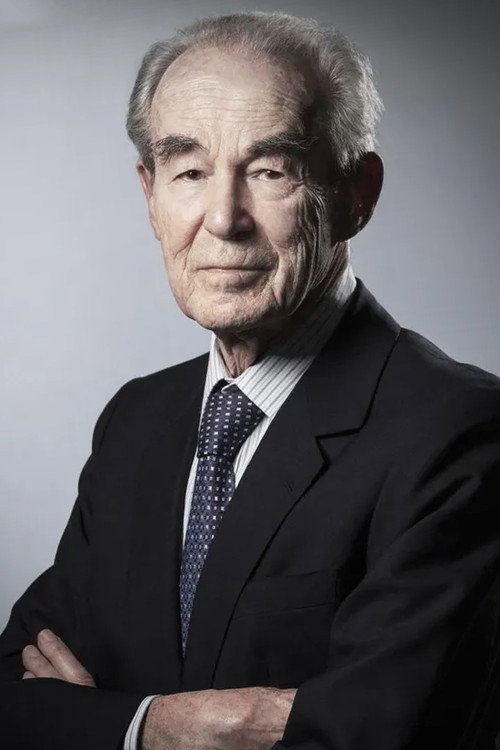
Full actor profile
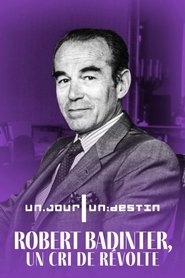
Robert Badinter
Acting
23 known credits
0.4 popularity score 95 years
Biography
About Robert Badinter
Robert Badinter (born 30 March 1928) is a French lawyer, politician and author who enacted the abolition of the death penalty in France in 1981, while serving as Minister of Justice under François Mitterrand. He has also served in high-level appointed positions with national and international bodies working for justice and the rule of law.
Robert Badinter was born 30 March 1928 in Paris to Simon Badinter and Charlotte Rosenberg. His Bessarabian Jewish family had immigrated to France in 1921 to escape pogroms. During World War II, after the Nazi occupation of Paris, his family sought refuge in Lyon. His father was captured in the 1943 Rue Sainte-Catherine Roundup and deported with other Jews to the Sobibor extermination camp, where he died shortly thereafter.
Badinter graduated in law from Paris Law Faculty of the University of Paris. He then went to the United States to continue his studies at Columbia University in New York City where he got his MA. He continued his studies again at the Sorbonne until 1954. In 1965, Badinter was appointed as a professor at University of Sorbonne. He continued as an Emeritus professor until 1996.
Badinter started his career in Paris in 1951, as a lawyer in a joint work with Henri Torrès. In 1965, along with Jean-Denis Bredin, he founded the law firm Badinter, Bredin et partenaires, (now Bredin Prat) where he practiced law until 1981.
Badinter's activism against the death penalty began after Roger Bontems's execution on 28 November 1972. Along with Claude Buffet, Bontems had taken a prison guard and a nurse hostage during the 1971 revolt in Clairvaux Prison. While the police were storming the building, Buffet slit the hostages' throats. Badinter served as defense counsel for Bontems. Although it was established during the trial that Buffet alone was the murderer, the jury sentenced both men to death. Badinter was outraged by unfair impositions of the death penalty and, after witnessing the executions, further dedicated himself to the abolition of the death penalty.
In this context, he agreed to defend Patrick Henry. In January 1976, 8-year-old Philipe Bertrand was kidnapped. Henry was soon picked up as a suspect, but released because of a lack of proof. He gave interviews on television, saying that those who kidnapped and killed children deserved death. A few days later, he was again arrested, and shown Bertrand's corpse hidden in a blanket under his bed. Badinter and Robert Bocquillon defended Henry, making the case not about Henry's guilt, but against applying the death penalty. Henry was sentenced to life imprisonment and paroled in 2001. ...
Source: Article "Robert Badinter" from Wikipedia in English, licensed under CC-BY-SA 3.0.
Photos
Profile gallery
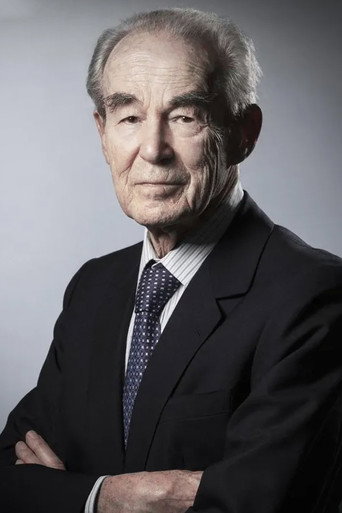

Career at a glance
Robert Badinter across film and television
23credited titles
16movie credits
7TV credits
1991–2025screen career span
Recognition
Awards received
Q133813064For Q139665688
Q139620555For Q139665688
Prix du livre politiqueFor Abolition
Prix Femina essaiFor Abolition
This list may not represent every nomination or win.
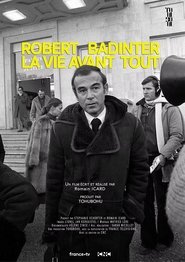
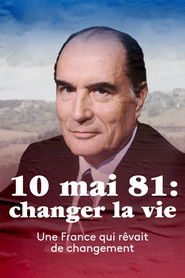
Recent movies and TV shows






Article

TV download guide
Pokémon (1997) — Episodes and downloads
Join Ash accompanied by his partner Pikachu, as he travels through many regions, meets new friends and faces new challenges on his quest to become a Pokémon Master.
Read the full guide 
Movie download guide
A Story of Derry (2026) — Download guide
Hundreds of years before Pennywise, three youngsters venture into the Western Wood...where they encounter a terrifying ancient spirit.
Read the full guide 
TV download guide
Law & Order (1990) — Episodes and downloads
In cases ripped from the headlines, police investigate serious and often deadly crimes, weighing the evidence and questioning the suspects until someone is taken into custody. The district attorney's office then builds a case to convict the perpetrator by proving the person guil…
Read the full guide