


Full actor profile
Dimple Kapadia
Acting
88 known credits
1.6 popularity score 69 years
Biography
About Dimple Kapadia
Dimple Kapadia (born 8 June 1957) is an Indian film actress who predominantly appears in Hindi films. She was launched by Raj Kapoor at age 16, playing the title role in his teen romance Bobby (1973). In that same year she married Indian actor Rajesh Khanna and retired from acting. Kapadia returned to the film industry in 1984, following her separation from Khanna. One of her films of that period was the drama Saagar (1985). Both Bobby and Saagar won her the Filmfare Award for Best Actress. She went on to establish herself as one of the leading actresses of Hindi cinema in the 1980s.
Initially recognized as a national sex symbol, Kapadia was keen to avoid being stereotyped and expand her range of acting roles. She subsequently took on more serious parts in a range of film genres, from mainstream to parallel cinema, and received acclaim for her performances in such films as Kaash (1987), Drishti (1990), Lekin... (1990), and Rudaali (1993), which earned her a National Film Award for Best Actress and a Filmfare Critics Award for Best Actress. She followed with supporting roles in Gardish (1993) and Krantiveer (1994), the latter of which garnered her a fourth Filmfare Award.
Kapadia continued working infrequently through the 1990s and the 2000s. She played a minor part in Dil Chahta Hai (2001) and was noted for her portrayal of the title role in the American production Leela (2002). Some of her later film credits include leading roles in Hum Kaun Hai? (2004), Pyaar Mein Twist (2005), Phir Kabhi (2008) and Tum Milo Toh Sahi (2010), and supporting roles in Being Cyrus (2005), Luck by Chance (2009), Dabangg (2010), Cocktail (2012) and Finding Fanny (2014). Kapadia is the mother of Twinkle Khanna and Rinke Khanna, both former actresses.
Photos
Profile gallery






Career at a glance
Dimple Kapadia across film and television
88credited titles
86movie credits
2TV credits
1973–2024screen career span
Recognition
Awards received
National Film Award for Best ActressFor Rudaali
Filmfare Critics Award for Best ActressFor Rudaali
Filmfare Award for Best ActressFor Saagar
This list may not represent every nomination or win.
Notable work



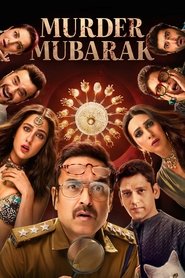

Recent movies and TV shows
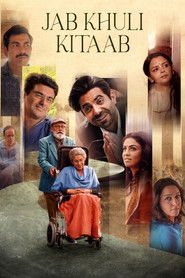







From FMM Reviews
Reviews and guides you may enjoy

Movie guide
Hope (2020): Cast, Story, Release Details
A complete guide to Hope, including its story, cast, release details, ratings, and where to watch or download it.
Read the full guide 
Movie guide
Hope (2024): Cast, Story, Release Details
A complete guide to Hope, including its story, cast, release details, ratings, and where to watch or download it.
Read the full guide 
TV guide
Na Wspólnej (2003): Series Review, Plot, Cast and Episodes
This Na Wspólnej (2003) review examines the soap series through its premise, storytelling, cast, performances, themes, production choices and audience response.
Read the full guide