


Full actor profile
Brigitte Fontaine
Acting
15 known credits
0.2 popularity score 87 years
Biography
About Brigitte Fontaine
Brigitte Fontaine, (born 24 June 1939) is a singer of avant-garde music. She has employed numerous unusual musical styles, melding rock and roll, folk, jazz, electronica, spoken word poetry, and world. She has collaborated with Stereolab, Michel Colombier, Jean-Claude Vannier, Areski Belkacem, Gotan Project, Sonic Youth, Antoine Duhamel, Grace Jones, Noir Désir, Archie Shepp, Arno, and The Art Ensemble of Chicago. She is also a novelist, playwright, poet, and actress.
The daughter of two teachers, Brigitte Fontaine developed her taste for writing and drama very early. She spent her childhood in small villages of Finistère, then in Morlaix. At 17 years old, she moved to Paris to become an actress.
In 1971, she was one of the women who signed the Manifesto of the 343, publicly admitting to having an abortion at a time when it was illegal in France.
In 1963, she turned to singing and appeared in several Parisian theatres, interpreting her own works. In 1964, she opened for Barbara and George Brassens's show at the Bobino. Even so, she did not give up theatre. With Jacques Higelin and actor Rufus, she created the play Maman j'ai peur ("Mom I am afraid"), which played first at the Vieille-Grille theatre, and then at the Théâtre des Champs-Élysées. It met with such a critical and popular success that it stayed in Paris for more than two seasons and toured throughout Europe.
In 1965 and then in 1968, she made two albums, one jazz and one avant-pop, as well as two 45s with Jacques Higelin. In 1969, she began what would be a long collaboration with Kabyle musician Areski Belkacem. With Belkacem and in the company of Higelin, she conceived Niok, an innovative spectacle of theatre and song, for the Lucernaire theatre. Soon after, Fontaine wrote a series of works in free verse and prose which comprised the show Comme à la radio at the Théâtre du Vieux-Colombier before being turned into an album of the same name. Recorded with the Art Ensemble of Chicago, this album marks a clean break with traditional French songs, building the first bridges to world music.
Brigitte Fontaine became a major figure in the French underground. In a half-dozen albums, the majority of which were released through the independent label Saravah, Fontaine explored different poetic worlds. She renounced the use of rhyme, and using talk-over sometimes, she recorded, with very little means and often on two tracks, songs which addressed topics with humour or gravity, according to the mood, as various as death ("Dommage que tu sois mort"), life ("L’été, l’été"), alienation ("Comme à la radio"), madness ("Ragilia"), love ("Je t’aimerai"), social injustice ("C’est normal"), the inequality of the sexes ("Patriarcat") and racism ("Y' a du lard"). However, she also knew how to make light of herself ("L'Auberge (Révolution)"). ...
Source: Article "Brigitte Fontaine" from Wikipedia in English, licensed under CC-BY-SA 3.0.
Photos
Profile gallery

Career at a glance
Brigitte Fontaine across film and television
15credited titles
9movie credits
6TV credits
1968–2024screen career span
Recognition
Awards received
This list may not represent every nomination or win.
Recent movies and TV shows


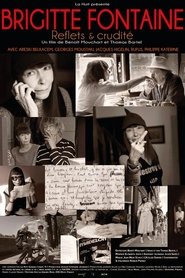


Article

TV download guide
Pokémon (1997) — Episodes and downloads
Join Ash accompanied by his partner Pikachu, as he travels through many regions, meets new friends and faces new challenges on his quest to become a Pokémon Master.
Read the full guide 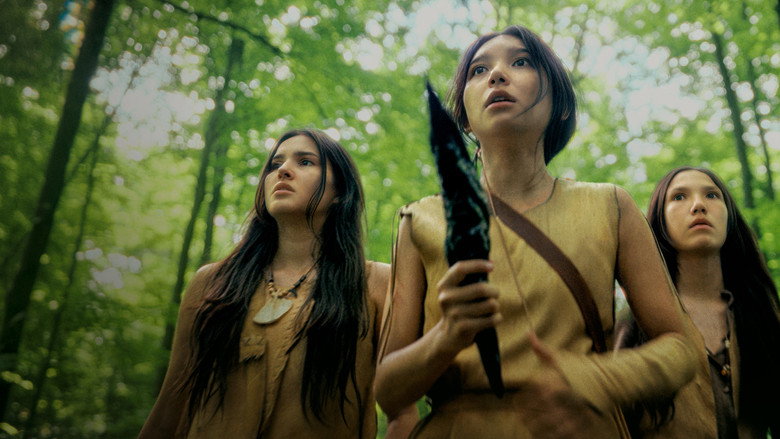
Movie download guide
A Story of Derry (2026) — Download guide
Hundreds of years before Pennywise, three youngsters venture into the Western Wood...where they encounter a terrifying ancient spirit.
Read the full guide 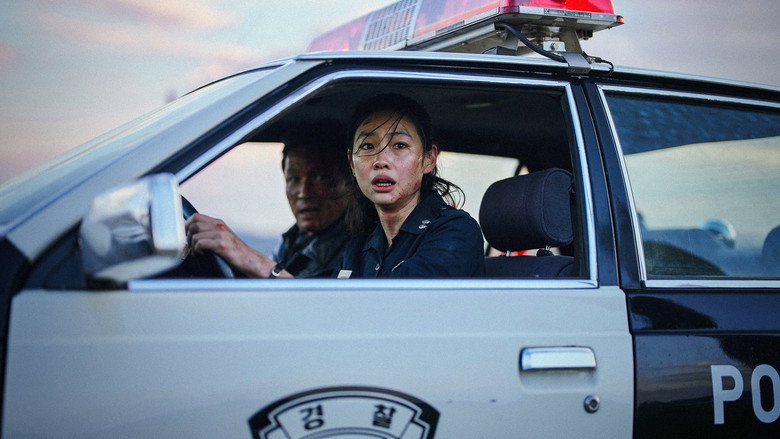
Movie download guide
Hope (2026) — Download guide
In the remote South Korean village of Hope Harbor, police chief Bum-seok and officer Sung-ae are called to investigate a mysterious creature wreaking havoc on the community. But all is not as it seems, and perceptions can be misleading. What begins as ignorance plants the seed o…
Read the full guide