
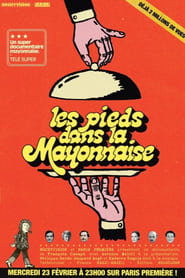
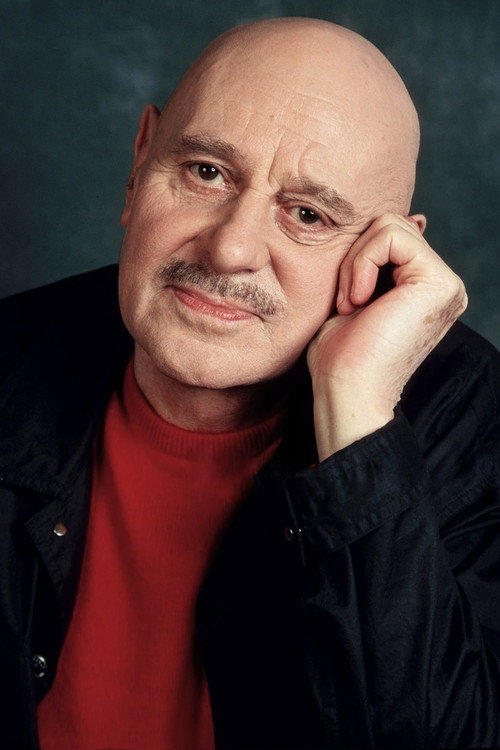
Full actor profile
Professeur Choron
Acting
17 known credits
0.6 popularity score 75 years
Biography
About Professeur Choron
Georget Bernier (21 September 1929 – 10 January 2005), more commonly known as Professeur Choron, was a French humorist and founder of Hara Kiri magazine.
Born in La Neuville-aux-Bois in Lorraine, Bernier was orphaned by his father at 11 years and without a proper education, he vacillated between many jobs before fighting in the Indochina Wars for 28 months. On his return he worked in the press, and rose through the ranks to take the position of sales manager of the satirical newspaper Zéro.
It was at Zéro that he met François Cavanna and Fred, with whom he founded the magazine Hara Kiri in 1960. After an initial ban, production of the magazine moved from Rue Choron to Rue de Montholon and Éditions du Square was created at its publication house.
In addition to his role of patron of Éditions du Square, Bernier also invested time in writing and photo-editing for Hara Kiri. It was during this era that he appeared on Jean-Christophe Averty's television variety show Les Raisins verts.
In 1969 the Hara Kiri team created Hara-Kiri Hebdo which shortly thereafter was renamed L’Hebdo Hara-Kiri. Other magazines published by Bernier's Editions du Square were the monthly comic Charlie Mensuel, one of the first ecological journals La Gueule ouverte, Mords-y l'œil, Surprise from designer Bernard Willem Holtrop, and Jean-Patrick Manchette's BD, l'hebdo de la BD.
1970 saw the creation of Charlie Hebdo, a weekly political newspaper for which Bernier was a regular contributor. The publication folded in 1981, but was relaunched by Cavanna and Bernier in 1993 and, as of 2011, remains in publication.
In 1988 Bernier adapted his fiches bricolages for television. He also participated in Jean-Michel Ribes' Merci Bernard. His last publications include La Mouise and Grodada, a publication for children. He also participated in several publications affiliated with Hara-Kiri, including ZOO and Yeti, as well as the launching of the periodical Zero in 1986.
In 1996, Aure Atika's interview of Jackie Berroyer for Radio Nova, at a bar's round table, degenerated into an angry exchange of words between Choron, who was sitting at the table, and Atika, with Choron denouncing her questions as "stupid" and Atika flinging the contents of her glass at him.
Bernier was the father of the comedian Michèle Bernier. He died 10 January 2005 at Necker-Enfants Malades Hospital in Paris and was buried at Montparnasse Cemetery alongside his wife Odile Vaudelle (1934–1985). In 2008, director Pierre Carles and artist Martin released the documentary Choron Dernière in his honour.
Source: Article "Professeur Choron" from Wikipedia in English, licensed under CC-BY-SA 3.0.
Photos
Profile gallery

Career at a glance
Professeur Choron across film and television
17credited titles
12movie credits
5TV credits
1972–2022screen career span
Recent movies and TV shows






Article

TV download guide
Pokémon (1997) — Episodes and downloads
Join Ash accompanied by his partner Pikachu, as he travels through many regions, meets new friends and faces new challenges on his quest to become a Pokémon Master.
Read the full guide 
TV download guide
The Legendary Tycoon (2017) — Episodes and downloads
The life of Sir Run Run Shaw, showcasing the tycoon's legendary life, the story of a man and his enduring love with three women in his life.
Read the full guide 
TV download guide
The Simpsons (1989) — Episodes and downloads
Set in Springfield, the average American town, the show focuses on the antics and everyday adventures of the Simpson family; Homer, Marge, Bart, Lisa and Maggie, as well as a virtual cast of thousands. Since the beginning, the series has been a pop culture icon, attracting hundr…
Read the full guide