

Full actor profile
Anna May Wong
Acting
82 known credits
0.5 popularity score 56 years
Biography
About Anna May Wong
Wong Liu Tsong (January 3, 1905 – February 3, 1961), known professionally as Anna May Wong, was an American actress whose long career spanned both silent and sound films, television, stage, and radio. Apart from being recognized as the the first Chinese-American movie star, as well as the first Asian-American to become an international star, she was also seen as an acclaimed fashion icon due to her being the one of the early stars to embrace the flapper look.
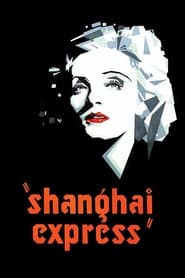
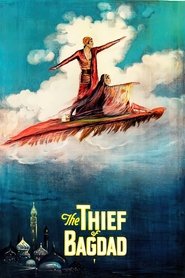
Born near the Chinatown neighborhood of Los Angeles to second-generation Chinese-American parents, Wong became infatuated with the movies at an early age and quit education to focus on beginning an acting career. After landing parts as uncredited extras in silent films, she had her first leading role in The Toll of the Sea (1922), one of the first movies made in color. Her role in Douglas Fairbanks' The Thief of Bagdad (1924) helped her achieve international stardom. Tired of being offered stereotypical supporting roles, she left Hollywood for Europe in the late 1920s, where she starred in several plays alongside notable names like Laurence Olivier. She made her final silent film in Britain titled Piccadilly (1929), which earned her wide praise. Her first talkie, The Flame of Love (1930), was recorded in three languages: English, French and German. She spent the first half of the 1930s traveling between the United States and Europe for film and stage work. Wong was featured in films of the early sound era, such as Daughter of the Dragon (1931) and Daughter of Shanghai (1937), and with Marlene Dietrich in Josef von Sternberg's Shanghai Express (1932). These films brought her more and more fame, which she used to express her staunch political views. Although she advocated for Chinese-American causes and criticized the stereotypical roles she played, Chinese press and critics continued to view her as a disgrace to the country. After experiencing the most severe disappointment of her career, when Metro-Goldwyn-Mayer refused to consider her for the leading Chinese role in the film The Good Earth (1937), and instead chose a white German actress in yellowface, Wong spent the a year touring China, visiting her family's ancestral village, and studying Chinese culture. Returning to Hollywood, she starred in several B movies that portrayed Chinese-Americans in a positive light in the late-1930s.
As World War II rolled around, she focused less on her film career and decided to devote her time and money in helping the Chinese against Japanese invasions. Returning to the public eye in the 1950s with several television appearances, she started her own detective mystery television show titled The Gallery of Madame Liu-Tsong (1951), the first U.S. television show starring an Asian-American. She was scheduled to return to film in Flower Drum Song (1961) but she died of a heart attack.
For decades after her death, Wong was remembered mostly for the stereotypical roles she was given although critics have begun to reevaluate her life and career. In 2022, Wong became the first Asian-American to be depicted on American coinage when the quarters with her image on them went into circulation. In 2023, Mattel released a Barbie doll modeled on Wong in honor of Asian American and Pacific Islander Heritage Month.
Photos
Profile gallery



Career at a glance
Anna May Wong across film and television
81credited titles
73movie credits
8TV credits
1919–2024screen career span
Recognition
Awards received
This list may not represent every nomination or win.
Notable work

Recent movies and TV shows

Drifting (The Attempted Reanimation of Anna May Wong)

Searching for Anna May Wong

Asian Americans

Yellowface: Asian Whitewashing and Racism in Hollywood
Golden Gate Girls

Anna May Wong - Frosted Yellow Willows: Her Life, Times and Legend
Dragon by the Tail
The Barbara Stanwyck Show
Danger Man

Portrait in Black
Article

TV download guide
Pokémon (1997) — Episodes and downloads
Join Ash accompanied by his partner Pikachu, as he travels through many regions, meets new friends and faces new challenges on his quest to become a Pokémon Master.
Read the full guide 
Movie download guide
The End of Oak Street (2026) — Download guide
After a mysterious cosmic event rips Oak Street from suburbia and transports their neighborhood to someplace unknown, the Platt family soon discovers that their very survival depends on them sticking together as they navigate their now unrecognizable surroundings.
Read the full guide 
TV download guide
Hanaori-san Still Wants to Fight in the Next Life (2026) — Episodes and downloads
Once the Demon King, now a shut-in NEET—Ryusei Narukami's second life is anything but peaceful! When Meteor Hanaori, the Hero who once defeated him, suddenly returns as a normal high school girl, his world is thrown into chaos. Determined to change, Ryusei reenters society as a …
Read the full guide