

Full actor profile
Dan Nuțu
Acting
25 known credits
0.3 popularity score 82 years
Biography
About Dan Nuțu
Dan Nuțu is a Romanian stage and film actor and producer, also known for his involvement in documentary filmmaking and film education.
A graduate of the Institute of Theatre and Film Arts (IATC) in 1966, Nuțu began his career at the Bulandra Theatre in Bucharest. He rose to prominence in cinema with his role in Sunday at Six (Duminică la ora 6, 1965), the debut feature of director Lucian Pintilie, where he played a young communist underground activist. Throughout the late 1960s, he became emblematic of a new type of screen presence in Romanian cinema—intense, rebellious, and emotionally vulnerable. Film critic Tudor Caranfil famously described him as “the tough-yet-vulnerable face of 1960s Romanian cinema.”
He went on to appear in notable films such as Meanders (*Meandre*, 1967) and The Mornings of a Sensible Boy (*Diminețile unui băiat cuminte*, 1967), consolidating his image as a nonconformist youth figure during a transformative period in Romanian filmmaking.
In 1979, Nuțu left Romania and settled in the United States, where he worked as a taxi driver while remaining loosely connected to the film and theater world, mostly in minor or background roles. After the fall of communism, he gradually reconnected with the Romanian film industry. Beginning in 2005, he became involved in the **Aristoteles Workshop**, an international documentary filmmaking program supported by ARTE and TVR, mentoring and supporting new generations of documentary filmmakers.
Today, Dan Nuțu remains a cult figure of the Romanian New Wave’s precursor generation—an actor whose brief but striking 1960s film career left a lasting imprint on Romanian cinema history.
Photos
Profile gallery

Career at a glance
Dan Nuțu across film and television
25credited titles
25movie credits
0TV credits
1965–2022screen career span
Recent movies and TV shows





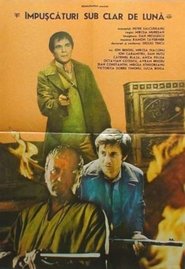
From FMM Reviews
Reviews and guides you may enjoy

Movie guide
Hope (2025): Cast, Story, Release Details
A complete guide to Hope, including its story, cast, release details, ratings, and where to watch or download it.
Read the full guide 
Movie guide
Hope (2015): Cast, Story, Release Details
A complete guide to Hope, including its story, cast, release details, ratings, and where to watch or download it.
Read the full guide 
TV guide
CITV Breakfast (1999): Series Review, Plot, Cast and Episodes
This CITV Breakfast (1999) review examines the kids series through its premise, storytelling, cast, performances, themes, production choices and audience response.
Read the full guide