


Full actor profile
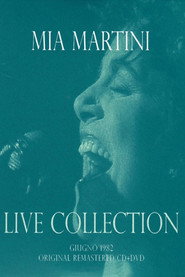
Mia Martini
Acting
9 known credits
0.4 popularity score 47 years
Biography
About Mia Martini
Mia Martini (born Domenica Rita Adriana Bertè; 20 September 1947 – 12 May 1995) was an Italian singer, songwriter and musician. She is considered, by many experts, one of the most important and expressive female voices of Italian music, characterised by her interpretative intensity and her soulful performance.
Her debut album, Oltre la collina with the song "Padre davvero" is regarded as one of the best Italian albums made by a female artist. Hit songs like "Piccolo uomo", "Donna sola", "Minuetto", "Inno", "Al mondo", "Che vuoi che sia se t'ho aspettato tanto", "Per amarti" and "La costruzione di un amore" made her one of the most popular artists of Italian music in the 1970s, both nationally and internationally. She is the only female artist to have won two Festivalbar consecutively, respectively in 1972 and in 1973.
In 1977, two important encounters occurred in Martini's life: the first with Charles Aznavour, with whom she began a musical collaboration, and the second with singer-songwriter Ivano Fossati, with whom she started an artistic and sentimental partnership.
She returned to the music scene in 1981, after she underwent two vocal-cord surgeries that changed her vocal timbre and extension.
In 1982, she sang "E non finisce mica il cielo", written by Fossati, at Sanremo Music Festival, where she received the Critics Award, which was created specifically for her interpretation and which was named after her as "Mia Martini" Critics Awards from 1996, the year after her death.
In 1983, she was forced to leave the music industry and quit her career, as the music sector and colleagues considered her a person bringing bad luck and barred her from participating in any music and TV events, radio shows and concerts. This kept her away from the music scene for seven years. Only in 1989 was she able to reprise her career, when she returned to perform at Sanremo Music Festival, singing "Almeno tu nell'universo", which brought her a new success.
Martini's later hits included "Gli uomini non cambiano", "La nevicata del '56" and "Cu' mme", the latter with Roberto Murolo. She represented Italy at the Eurovision Song Contest twice, in 1977 with the song Libera and in 1992 with the song Rapsodia.
She died on 12 May 1995 in Cardano al Campo at the age of 47.
Domenica Rita Adriana Bertè was born in Bagnara Calabra, (Reggio Calabria), in southern Italy, on 20 September 1947, the second of four daughters: the oldest, Leda (born in 1946), Loredana (born in 1950) and the youngest Olivia (born in 1958). Martini's father, Giuseppe Radames Bertè (1921-2017), was a teacher of Latin and Greek. He was born in Villa San Giovanni, he moved to Marche with his family, first working as a professor and later becoming High School headmaster in Ancona. Martini's mother, Maria Salvina Dato (1925-2003), born in Bagnara Calabra, was an elementary school teacher.
"Mimì" (Martini's nickname) spent her childhood in Porto Recanati, in Marche region, where she showed early an interest in music. She began to perform at parties and dance halls, and entered some song contests for new voices. In 1962 she convinced her mother to take her to Milan for an audition, with the hope to get a record deal. ...
Source: Article "Mia Martini" from Wikipedia in English, licensed under CC-BY-SA 3.0.
Photos
Profile gallery

Career at a glance
Mia Martini across film and television
9credited titles
3movie credits
6TV credits
2013–2020screen career span
Notable work
Recent movies and TV shows






Article

TV download guide
Pokémon (1997) — Episodes and downloads
Join Ash accompanied by his partner Pikachu, as he travels through many regions, meets new friends and faces new challenges on his quest to become a Pokémon Master.
Read the full guide 
TV download guide
Hanaori-san Still Wants to Fight in the Next Life (2026) — Episodes and downloads
Once the Demon King, now a shut-in NEET—Ryusei Narukami's second life is anything but peaceful! When Meteor Hanaori, the Hero who once defeated him, suddenly returns as a normal high school girl, his world is thrown into chaos. Determined to change, Ryusei reenters society as a …
Read the full guide 
TV download guide
Law & Order (1990) — Episodes and downloads
In cases ripped from the headlines, police investigate serious and often deadly crimes, weighing the evidence and questioning the suspects until someone is taken into custody. The district attorney's office then builds a case to convict the perpetrator by proving the person guil…
Read the full guide